
Stock Market Simulator Game
Three InvesteersFinance
4.5977.00 Reviews
- Version
- 3.5.3
- Installs
- 1.00M
- Age Rating
- Everyone
Screenshots
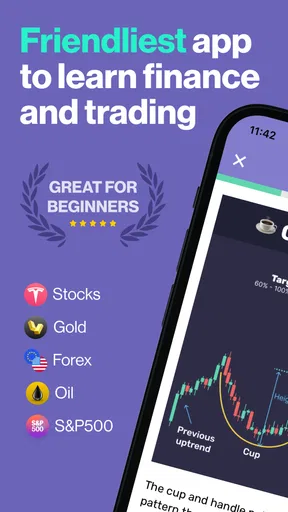
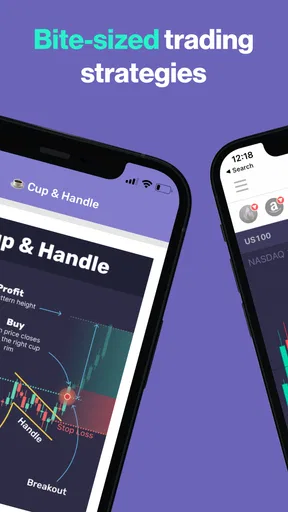
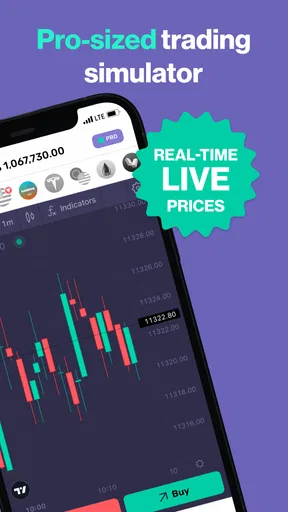
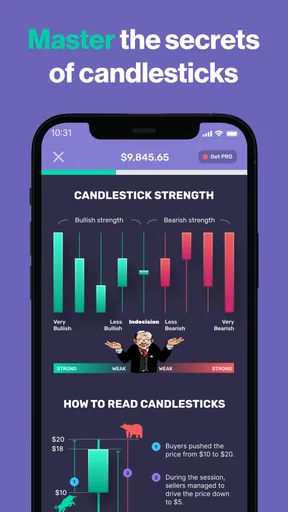
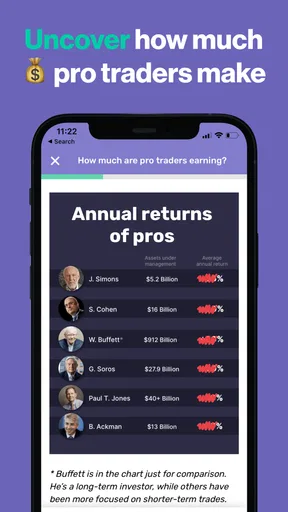
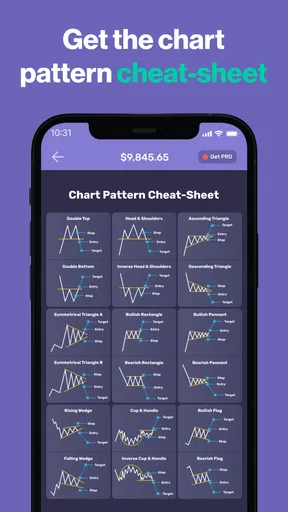
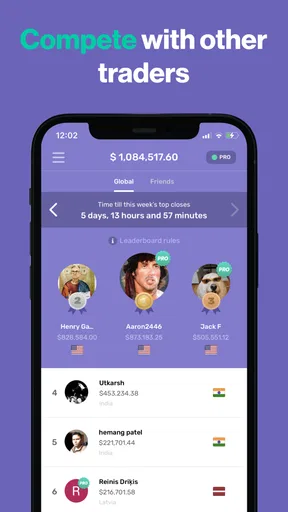
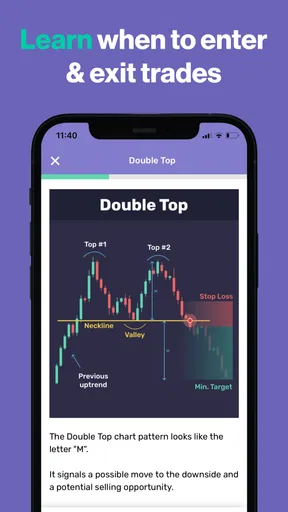
Our Review of Stock Market Simulator Game
 Analysis by Appyee
If you’ve ever been curious about trading but wary of learning with real money, a simulator can offer a lower-pressure place to explore the basics. Stock Market Simulator Game is a finance app from Three Investeers, aimed at people who want to get a feel for markets through practice. I’d treat it as a learning aid, not as a shortcut to investment expertise: simulated decisions can help you notice how you think, but they don’t recreate every pressure or consequence of investing for real.
Readable screens, with a learning curve worth noticing
The app’s focus on trading practice gives newcomers a more approachable starting point than opening a full brokerage app and facing real-money choices immediately. Its store summary describes a trading school for beginners, and the short description points to the stock market. That framing is useful: I would go in expecting a learning experience, rather than a complete replacement for a broker, a financial news service, or a structured personal-finance course.
In my experience, a clean, uncluttered interface matters because market information can feel like a wall of unfamiliar terms. A beginner benefits from being able to focus on one decision at a time: what they think is happening, why they would act, and what they can learn from the result. Even so, a simple screen cannot make every concept simple. If you’re unsure what a trading term means, pause and look it up instead of treating an unfamiliar label as a recommendation.
The app is free to download, has an Everyone content rating, and requires Android 6.0 or later. Its current version is 3.5.3. It has earned a 4.6 average from around 15,000 ratings and has over a million installs, so it has reached a sizeable audience without that popularity being proof that its lessons will suit every learner. In-app purchases range from $0.99 to $119.99 per item, so I’d check the purchase details before committing to anything. The basic question to ask yourself is whether the practice available to you is enough, rather than assuming that paying automatically makes the learning more valuable.
Practice is most useful when you make it deliberate
A simulator is easy to use casually: make a trade, watch what happens, and move on. I get more value from it when I treat each choice as a small experiment. Before acting, write down what you expect and why. Later, compare that expectation with the outcome. This simple habit helps separate a reasoned decision from a lucky result, which is especially important when a short winning streak might otherwise feel like proof of skill.
One practical everyday scenario is using a few minutes during a commute or lunch break to consider a market move you’ve heard about, then returning later to see whether your reasoning held up. The point isn’t to make rapid trades whenever you have spare time; it’s to practise asking better questions. What information influenced the choice? What would change your mind? Did you react to a clear reason, or simply to a price moving? Keeping the exercise focused makes short sessions more useful than repeatedly checking for excitement.
Another helpful approach is to revisit a decision after the emotion has faded. A paper or virtual portfolio removes the immediate financial loss, but it can still reveal habits such as chasing a rising price or abandoning a plan after a small setback. I’d use those observations as prompts for further learning, not as evidence that the same action will work with real money. A simulator can help you rehearse a process; it cannot remove uncertainty from markets.
Who will get the most from it
I’d recommend trying it if you’re new to trading, curious about how market choices play out, and willing to learn slowly. It can also suit someone who already follows financial news and wants a place to test an idea without putting savings at risk. The strongest use case is practice with a specific learning goal: understanding the effect of a decision, reflecting on your reasoning, and adjusting your approach.
It’s less suitable if you want direct investing, personalised financial advice, or a reliable forecast of what to buy next. Someone managing real savings may be better served by a regulated brokerage for transactions and trustworthy educational material for concepts such as risk, diversification, and long-term planning. Those tools answer different needs. A simulator is for rehearsal; it does not become a financial plan just because its market setting feels realistic.
I’d also be cautious about using competitive or game-like elements as a measure of investment ability. If a challenge encourages you to focus on growing a virtual portfolio quickly, that can be entertaining, but speed and leaderboard-style results are not the same as thoughtful financial decision-making. For a beginner, it’s better to judge progress by whether you can explain your choices than by whether you outperform another player.
Getting Started with the Game
First things first, downloading and setting up the Stock Market Simulator Game is a breeze. It's available for both Android and iOS, so no worries about compatibility. Once you're in, the app gives you a virtual bankroll to start trading. This is your chance to test out different strategies and see how they play out in a real-world market simulation.
The interface is clean and user-friendly, which is a huge plus for beginners. You won’t feel overwhelmed with charts and numbers flying at you from all directions. Instead, you get a streamlined experience that focuses on the essentials, making it an excellent tool for learning the ropes of stock trading.
Access in different situations—and where it can fall short
A phone-based practice tool is convenient when you have a short window to learn, and a less crowded interface can make it easier to concentrate than a desktop trading platform packed with panels. That convenience has a trade-off: small screens and quick sessions aren’t ideal for carefully comparing lots of information. If you find reading charts or working through financial details difficult on a phone, take your time and use a larger screen when one is available rather than feeling pushed to act quickly.
People also vary in how they prefer to take in information. Some learn by trying a decision and reviewing the outcome; others need explanations or a slower, step-by-step lesson before they feel comfortable. I would not assume that the app’s straightforward presentation will answer every question for every learner. If you need detailed definitions, a more formal course or written reference may be a better companion. The useful test is whether you can understand why a choice was made—not simply whether the app lets you make it.
As a finance app, it also asks you to keep the boundary between practice and real investing clear. Virtual success can make risk feel smaller than it is, while a simulated loss may not capture the stress of losing money you need. I’d avoid translating a result directly into a real trade. Instead, use it to identify questions to research and to notice which parts of your reasoning need work.
The Gameplay Experience
Now, let’s talk about the actual gameplay. The game simulates real-time stock market conditions, meaning the ups and downs mirror what's happening in the real world. It’s thrilling to see your investments grow—or shrink—based on market trends. You can trade a variety of stocks, and the app even allows you to dabble in cryptocurrencies if you're feeling adventurous.
What I loved most was the educational aspect. Each trade comes with a wealth of information, from company profiles to market analysis, helping you make informed decisions. It’s like having a mini stock market course built right into the app. Investment education has never been so accessible!
Features That Stand Out
One standout feature for me is the "Challenge Mode." Here, you can compete against friends or other users to see who can grow their portfolio the fastest. It's a fun way to add a bit of competitive spice to the learning process. Plus, it’s a great way to test your strategies against other budding traders.
Another cool feature is the "News Feed," which keeps you updated with the latest happenings in the financial world. This keeps the experience dynamic and helps you stay on your toes as you make trading decisions. The integration of real-world events into the game is a clever touch that enhances the realism of the simulation.
A more thoughtful way to use its features
When I use a market simulator, I try not to let news become a reason to trade automatically. A headline can provide context, but it doesn’t by itself explain whether a move is sensible or whether the information is already reflected in the market. A better exercise is to note what you think the news means, make a considered decision, and then review the result. That turns the feed into a prompt for critical thinking instead of a stream of instructions.
Challenges can be more useful as a way to compare decision-making than as a race to a bigger virtual balance. If you take part, agree with yourself on what you want to learn before you start. For example, focus on whether you can stick to a reasoned plan, rather than changing tactics just to catch up. This keeps competition enjoyable without confusing game performance with real-world investing skill.
Compared with a conventional brokerage app, this one’s appeal is the chance to practise without putting personal funds on the line. Compared with a general investing course, its appeal is the hands-on format and the connection to market activity. The trade-off is that neither a simulator nor a game-like challenge can replace a careful explanation of financial risks or professional guidance where you need it. I’d use it alongside reliable learning resources, not instead of them.
Wrapping It Up
Overall, the Stock Market Simulator Game is a fantastic way to get acquainted with the stock market. Whether you’re a complete newbie or someone looking to hone their trading skills, this app offers a risk-free environment to learn and practice. It's engaging, educational, and just plain fun.
If you've ever been curious about stock trading but felt intimidated by the complexity, this app is a great starting point. Dive in, play around, and who knows? You might just discover your inner Wall Street wizard. Happy trading!
My inclusive verdict
I see this as a welcoming first step for people who want to explore trading in a lower-pressure setting, especially if they learn by testing ideas and reflecting on outcomes. Its straightforward presentation and mobile format may make it easier to approach than a professional trading screen, but individual needs differ: small text, dense market concepts, and the temptation to move quickly can still be barriers. Take breaks, slow down, and seek another learning format if the screen or pace doesn’t work for you.
For me, the best reason to try it is not the promise of becoming a trader overnight. It’s the chance to practise curiosity, build a habit of checking your assumptions, and learn where your understanding is thin before real money is involved. If you keep that boundary clear—and remember that simulated results are not guarantees—the app can be an engaging starting point. If you need accessible, in-depth instruction or a tool for managing actual investments, choose resources designed specifically for those needs.
Verdict
Strengths of Stock Market Simulator Game
- Realistic market scenarios for immersive learning.
- User-friendly interface for easy navigation.
- Customizable portfolios for personalized experience.
- No real money required, risk-free trading.
- Comprehensive tutorials for beginners.
Limitations of Stock Market Simulator Game
- Limited real-time data integration.
- Occasional in-app advertisements.
- Requires stable internet connection.
- Advanced features locked behind paywalls.
- Limited stock options compared to real markets.
Similar Picks in This Category
View All
Google Wallet
Google LLC4.3

Airtel: Recharge, Bank & Loans
Airtel4.0

PayPal - Pay, Send, Save
PayPal Mobile4.2

DANA Indonesia Digital Wallet
PT Espay Debit Indonesia Koe4.5

Binance: Buy Bitcoin & Crypto
Binance Inc.4.8

Cash App
Block, Inc.4.7
Frequently Asked Questions
What is the main objective of the Stock Market Simulator Game?
The primary goal of the Stock Market Simulator Game is to provide users with a virtual environment where they can practice trading stocks without financial risk. Players can experience the dynamics of the stock market, learn investment strategies, and develop their trading skills using real-time data, all while using virtual currency.
Is the Stock Market Simulator Game suitable for beginners?
Absolutely! The Stock Market Simulator Game is designed with beginners in mind. It offers tutorials, tips, and guides to help new users understand the basics of stock trading. The app provides a safe space to learn market terminology, understand stock charts, and build confidence in making investment decisions without the fear of losing real money.
Does the game use real-time data for stock prices?
Yes, the Stock Market Simulator Game uses real-time data to simulate a realistic trading experience. This feature allows users to track stock prices and market trends as they happen, providing an authentic feel of the stock market. It’s a great way to test strategies and see how they might perform in real-world scenarios.
Are there any in-app purchases or advertisements?
The Stock Market Simulator Game is free to download, but it may include optional in-app purchases for enhanced features or premium content. Additionally, users might encounter advertisements within the app. These elements help support the developers and keep the basic features accessible to all users without a cost.
Can I interact with other players within the game?
Yes, the Stock Market Simulator Game often includes social features that allow players to interact with each other. Users can join trading competitions, share strategies, or discuss market trends in community forums. This social aspect adds an engaging layer to the learning process, fostering a sense of community among users.
